
SEARCH PRODUCTS
Windshield Washer Pump Not Working? Common Causes and What to Check
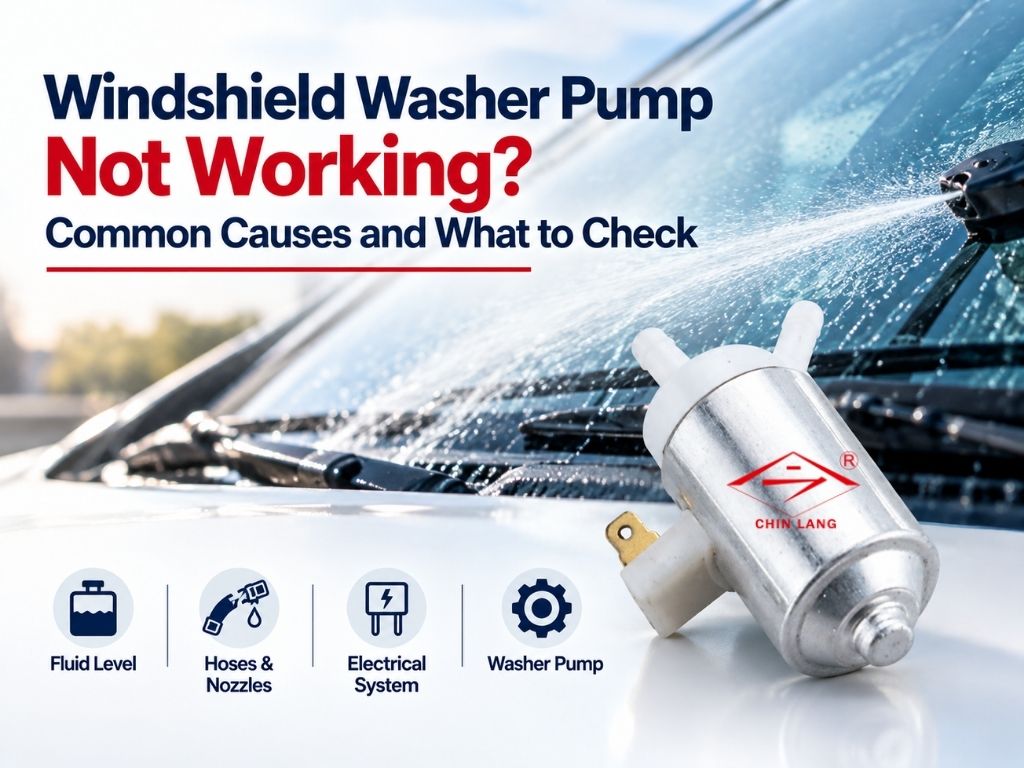
A windshield washer pump that stops working can quickly become a visibility problem, especially during rain, dusty driving conditions, or winter road travel. When washer fluid fails to reach the windshield, however, the pump itself is not always the cause. An empty reservoir, clogged nozzle, damaged hose, electrical fault, or failed pump can produce similar symptoms.
The most effective approach is to identify the symptom before replacing any component. For vehicle owners, technicians, and aftermarket parts buyers, understanding how the washer system operates can prevent unnecessary repairs and help ensure that the correct replacement part is selected.
With experience manufacturing automotive washer system components, Chin Lang Autoparts offers windshield washer pumps for different vehicle applications, including 12V and 24V configurations. Understanding the common causes of washer system failure also helps distributors and professional buyers evaluate replacement requirements more accurately.
Table of Contents
- What Does a Windshield Washer Pump Do?
- Quick Diagnosis: Match the Symptom to the Possible Cause
- Six Common Reasons a Windshield Washer Pump Stops Working
- How to Test a Windshield Washer Pump Before Replacing It
- When Should a Windshield Washer Pump Be Replaced?
- Choosing the Right Replacement Washer Pump
- How to Prevent Windshield Washer System Problems
- Chin Lang Autoparts: Windshield Washer Pump Solutions
- FAQ: Windshield Washer Pump Troubleshooting
- Conclusion: Diagnose the Problem Before Replacing the Pump
1. What Does a Windshield Washer Pump Do?
A windshield washer pump is an electrically driven component that moves washer fluid from the reservoir through the washer hoses to the spray nozzles.
When the driver activates the washer control, the vehicle's electrical system supplies power to the pump. The pump generates the flow needed to deliver fluid onto the windshield, allowing the wiper blades to remove dirt, dust, road salt, and other contaminants.
The washer system generally includes a fluid reservoir, electric pump, hoses, connectors, and spray nozzles. Some vehicles also use check valves, filters, multiple pumps, or additional washer functions for the rear window or headlights.
Because these components work together, a windshield washer system that does not spray fluid does not necessarily have a defective pump. Correct diagnosis requires checking both the fluid delivery path and the electrical supply.
2. Quick Diagnosis: Match the Symptom to the Possible Cause
The easiest way to begin troubleshooting is to observe what happens when the washer control is activated.
| Washer System Symptom | Possible Causes | What to Check First |
|---|---|---|
| No sound and no washer fluid | Blown fuse, electrical fault, defective switch, failed pump | Fuse and electrical supply |
| Pump makes noise but no fluid sprays | Empty reservoir, blocked hose, clogged nozzle, pump delivery problem | Fluid level and hoses |
| Weak or uneven spray | Restricted nozzle, leaking hose, reduced pump performance | Nozzles and fluid flow |
| Washer fluid leaks beneath the vehicle | Damaged reservoir, hose, connection, or pump seal | Reservoir and hose connections |
| Washer works intermittently | Loose connector, wiring fault, intermittent pump failure | Electrical connections |
| Front washer works but rear washer does not | Rear hose or nozzle problem, control fault, or pump-related issue | Vehicle-specific front/rear washer configuration |
These symptoms provide a starting point rather than a final diagnosis. For example, hearing the pump motor run confirms that some electrical and mechanical activity is occurring, but it does not prove that the pump is delivering sufficient fluid.
Similarly, a silent pump may be defective, but it may also be receiving no power.
3. Six Common Reasons a Windshield Washer Pump Stops Working
3.1 Empty Washer Fluid Reservoir or Incorrect Washer Fluid
An empty washer reservoir is one of the simplest causes of a washer system that does not spray.
Before checking electrical components or removing the pump, verify that the reservoir contains sufficient washer fluid. Inspect the reservoir for visible cracks, damaged connections, or signs of leakage.
In cold climates, unsuitable washer fluid can freeze in the reservoir, pump, hoses, or nozzles. Frozen fluid can prevent normal delivery and may damage components.
Use washer fluid appropriate for the vehicle and local temperature conditions. If freezing is suspected, allow the system to thaw safely before testing it again. Avoid repeatedly operating the pump against a frozen or obstructed system.
3.2 Clogged Washer Nozzles or Blocked Hoses
Washer nozzles have small outlets that can become obstructed by dirt, mineral deposits, or other contamination. Hoses can also become kinked, disconnected, or restricted.
When the pump can be heard operating but fluid does not reach the windshield, the delivery path should be inspected before replacing the pump.
A practical check is to examine the hoses for leaks or damage and determine whether fluid reaches the nozzle inlet. If fluid flows through the hose but not through the nozzle, the nozzle is likely restricted.
Clean nozzles using methods appropriate for their design. Avoid forcing sharp tools into precision spray outlets, as this can damage the nozzle or alter its spray pattern.
3.3 Blown Fuse or Electrical Supply Problem
The windshield washer pump requires an electrical supply to operate. A blown fuse, damaged wire, poor ground connection, or defective control circuit can prevent the pump from running.
If the pump makes no sound when activated, check the washer system fuse using the vehicle's fuse diagram. Replace a blown fuse only with the specified rating.
If the replacement fuse blows again, further electrical diagnosis is necessary. Repeated fuse failure may indicate a short circuit or an overloaded component.
For a more accurate diagnosis, a technician can check whether the correct voltage and ground are available at the pump connector while the washer system is commanded to operate.
Electrical testing should follow the vehicle manufacturer's service procedures, especially on vehicles with electronically controlled washer systems.
3.4 Damaged Washer Pump Connector or Wiring
The washer pump is often mounted near the lower portion of the washer reservoir, where its connector may be exposed to moisture, road contamination, and vibration.
Over time, connector corrosion, loose terminals, damaged insulation, or poor contact can interrupt electrical operation.
An intermittent washer system may therefore be caused by the connector rather than the pump motor.
Inspect accessible wiring and connectors for corrosion, damaged terminals, or loose connections. Repair damaged wiring using suitable automotive methods and ensure that the connector is properly secured.
3.5 Worn or Failed Windshield Washer Pump
Like other small electric motors, washer pumps can eventually fail through electrical or mechanical deterioration.
Possible problems include motor wear, internal corrosion, damaged impeller components, or restrictions affecting the pump mechanism.
A pump may fail completely, operate intermittently, or run without delivering sufficient fluid. The exact symptom depends on the failure mode and pump design.
Before confirming pump failure, verify the fluid supply, delivery path, and electrical input. If the pump receives the specified power and ground but fails to operate, or if its output remains inadequate after external restrictions have been eliminated, replacement may be necessary.
3.6 Leaking Pump Grommet, Hose, or Reservoir Connection
Some washer pumps are fitted directly into the reservoir through a sealing grommet. If the grommet deteriorates or the connection becomes loose, washer fluid may leak.
A leak can also occur at the pump outlet, hose connection, or reservoir body.
In these situations, the pump motor may still operate correctly, but fluid delivery becomes unreliable because washer fluid escapes before reaching the nozzles.
Inspect the source of the leak carefully. Replacing the pump will not necessarily resolve a problem caused by a damaged hose, reservoir, or sealing grommet.
4. How to Test a Windshield Washer Pump Before Replacing It
A systematic diagnosis helps distinguish pump failure from other washer system problems.
- Step 1: Check the fluid level and visible leaks.
Confirm that the reservoir contains suitable washer fluid and inspect accessible hoses and connections. - Step 2: Activate the washer and listen.
A motor sound suggests that the pump is operating, although fluid delivery still needs verification. No sound requires further electrical or pump testing. - Step 3: Inspect the nozzles and hoses.
Look for blockages, disconnected hoses, leaks, or restricted fluid flow. - Step 4: Check the fuse and electrical connector.
Use the correct vehicle service information to identify the fuse and inspect the pump connector. - Step 5: Verify pump voltage and ground.
A qualified technician can test the electrical supply while the pump is commanded to operate. - Step 6: Confirm whether replacement is required.
Replace the pump when testing identifies an internal failure or inadequate output that cannot be explained by external restrictions.
Important: Do not assume every vehicle uses the same washer pump circuit. Some vehicles have separate front and rear pumps, while others use a reversible pump or electronically controlled arrangement. Testing must account for the actual system design.
5. When Should a Windshield Washer Pump Be Replaced?
A windshield washer pump does not have a universal replacement interval. Its service life depends on operating conditions, fluid quality, usage, electrical conditions, and component design.
Replacement is generally appropriate when the pump has been confirmed to be defective, rather than simply because the washer system is not spraying.
Typical replacement situations include a motor that fails despite receiving the correct electrical supply, an internal pump failure that prevents fluid delivery, or a pump with persistent inadequate output after other causes have been eliminated.
For repair workshops and aftermarket distributors, this distinction matters. Replacing a functional pump when the actual problem is a blocked nozzle or damaged hose creates unnecessary cost and may leave the original complaint unresolved.
6. Choosing the Right Replacement Washer Pump
Once replacement is necessary, selecting a compatible pump is just as important as diagnosing the failure correctly.
Although washer pumps may look similar, differences in electrical specifications, mounting dimensions, fluid connections, and intended applications can affect installation and operation.
| Selection Factor | Why It Matters |
|---|---|
| Vehicle make, model, and year | Helps identify the intended vehicle application |
| OE reference number | Provides an additional cross-reference for part identification |
| Operating voltage | The replacement must match the vehicle's electrical requirements |
| Electrical connector | Pin configuration and connector shape must be compatible |
| Mounting design | The pump must fit the reservoir and sealing arrangement |
| Inlet and outlet configuration | Fluid connections must match the washer system layout |
| Washer application | Windshield, rear-window, and headlamp systems may have different requirements |
| Pump performance | Flow and pressure characteristics must suit the intended system |
Why 12V and 24V Washer Pumps Are Not Interchangeable
Many passenger vehicles use 12V electrical systems, while some commercial vehicles use 24V systems.
A replacement pump must be selected according to the vehicle's specified electrical requirements. Installing a pump with an incorrect voltage rating can cause poor performance or electrical damage.
Chin Lang's washer pump range includes both 12V and 24V configurations for different applications. This makes voltage confirmation particularly important for distributors supplying replacement parts across passenger and commercial vehicle markets.
Why OE Numbers and Vehicle Applications Matter
An OE number can help identify a replacement pump, but it should not be the only factor considered.
Buyers should also verify connector design, mounting arrangement, voltage, hose configuration, and any vehicle-specific application notes.
A visually similar washer pump may not provide the correct fitment or operation for a particular vehicle.
For B2B buyers, maintaining accurate cross-reference and application information helps reduce incorrect orders, installation problems, and product returns.
7. How to Prevent Windshield Washer System Problems
Not every washer pump failure can be prevented, but proper maintenance can reduce avoidable problems.
Using appropriate washer fluid helps limit contamination and protects the system against freezing where necessary. Keeping the reservoir supplied with fluid also reduces the risk of operating the pump without an adequate fluid supply.
During routine vehicle maintenance, technicians can inspect hoses, reservoir connections, electrical connectors, and nozzle performance. Leaks and reduced spray performance should be investigated before they develop into complete system failure.
For commercial fleets, washer system inspections are particularly relevant because vehicles may operate in environments with road dust, heavy rain, snow, or frequent windshield contamination.
Maintaining a reliable washer system helps preserve driver visibility and avoids unnecessary service interruptions.
8. Chin Lang Autoparts: Windshield Washer Pump Solutions
Chin Lang Autoparts manufactures automotive washer system components for different vehicle applications.
Its windshield washer pump product range includes 12V and 24V options and applications for different washer system requirements.
For distributors, aftermarket suppliers, and automotive parts buyers, selecting a suitable washer pump requires accurate product identification and compatibility with the intended vehicle.
Chin Lang provides product specifications and application references to support this process.
Explore Chin Lang's Windshield Washer Pump products to review available configurations and replacement applications.
9. FAQ: Windshield Washer Pump Troubleshooting
Can a windshield washer pump make noise but still be defective?
Yes. Motor noise indicates that the pump is operating to some extent, but it does not guarantee adequate fluid delivery. An internal mechanical problem can reduce output. However, empty reservoirs, blocked hoses, and clogged nozzles should be ruled out before replacing the pump.
How can I tell whether the washer pump or the fuse is faulty?
Start by checking the specified fuse and whether the pump receives the correct electrical supply when activated. If the pump has the required voltage and ground but does not operate, the pump may be defective. If power is absent, the wiring, switch, fuse, or control circuit requires further diagnosis.
Can I replace a 12V washer pump with a 24V pump?
No, not unless the vehicle manufacturer specifically specifies that configuration. The replacement pump must match the vehicle's electrical system and application requirements. Voltage, connector configuration, and mounting compatibility should all be verified.
10. Conclusion: Diagnose the Problem Before Replacing the Pump
When a windshield washer pump stops working, the best solution begins with accurate diagnosis.
An empty reservoir, clogged nozzle, leaking hose, electrical fault, or defective pump can produce similar symptoms. Checking the fluid supply, delivery path, and electrical system before replacing parts helps avoid unnecessary repairs.
Once pump replacement is confirmed, correct voltage, mounting design, electrical connections, and vehicle application are essential for reliable operation.
For automotive distributors and aftermarket buyers, Chin Lang Autoparts offers windshield washer pump solutions for different vehicle requirements. Explore the company's product range to identify suitable replacement applications and discuss sourcing needs.
Contact Chin Lang Autoparts for Washer Pump Inquiries
Related Reading
How Wiper Linkage Assembly Design Affects Wiping Precision and Synchronization
Understand how linkage geometry and mechanical precision influence windshield wiping performance.
OEM vs Aftermarket Wiper Linkage Assemblies: What Buyers Should Evaluate
Learn how fitment, durability, and manufacturing consistency affect replacement-part selection.