
SEARCH PRODUCTS
How Wiper Linkage Assembly Design Affects Wiping Precision and Synchronization
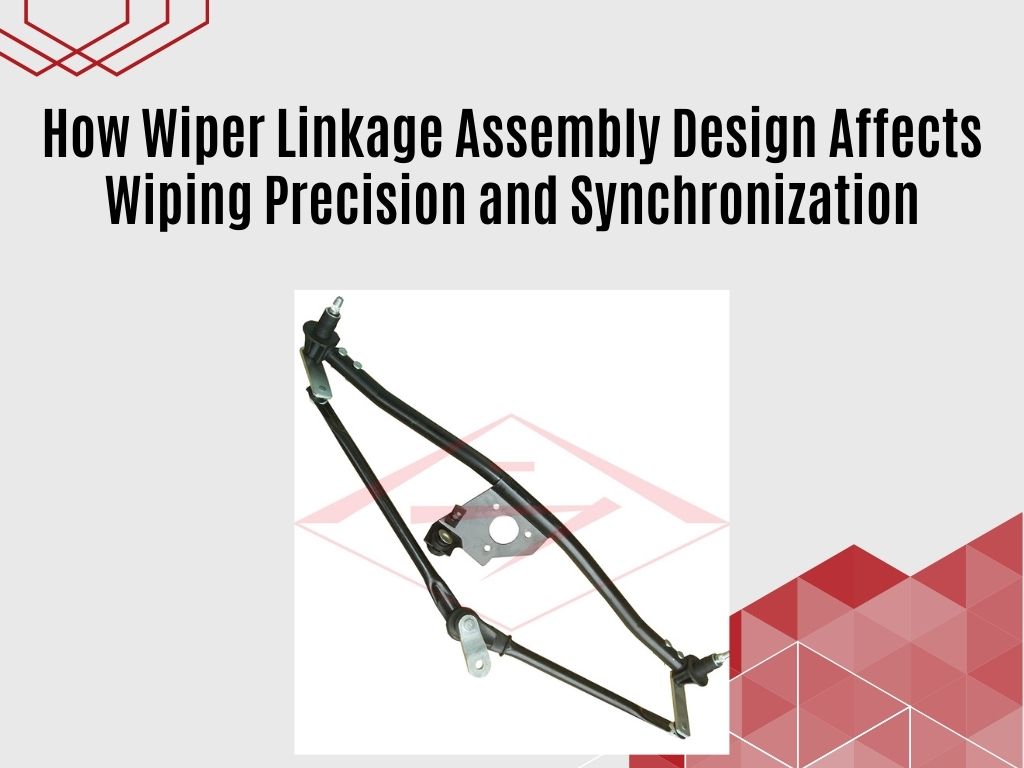
Windshield wiper performance is often judged by the motor speed or blade quality, but behind every smooth and synchronized wipe is a well-engineered wiper linkage assembly. This mechanical transmission system converts motor rotation into coordinated arm movement across the windshield. When the linkage assembly is properly designed, drivers experience stable, even, and quiet wiping. When it is not, problems such as uneven sweep, vibration, noise, and missed wipe zones quickly appear.
In real-world wiper system development and production experience, including long-term manufacturing practice at Chin Lang Autoparts, engineers consistently see that linkage geometry, joint precision, and structural rigidity are the factors that most directly determine wiping accuracy and synchronization. Understanding how wiper linkage assembly design influences motion control helps OEMs and buyers select more reliable systems and reduce long-term performance issues.
The Role of the Wiper Linkage Assembly in Motion Control
A wiper linkage assembly performs one critical function: it translates rotational motor output into synchronized oscillating motion for two wiper arms.
This involves:
- Link rods transmitting force
- Pivot joints controlling angle
- Lever geometry defining sweep path
- Joint tolerances maintaining timing accuracy
Because both wiper arms depend on the same mechanical transmission path, even small dimensional or angular deviations inside the linkage assembly can produce visible wiping errors.
Why Synchronization Accuracy Matters
Precise synchronization ensures:
- Equal sweep timing between left and right blades
- Consistent wipe coverage
- Balanced load on the wiper motor
- Reduced vibration and noise
- Predictable parking position
Poor synchronization may lead to:
- One blade lagging behind
- Uneven wipe speed
- Irregular sweep boundaries
- Increased motor strain
- Driver visibility gaps
Under high-speed driving and heavy rain conditions, these differences become more noticeable.
Key Design Factors That Influence Wiping Precision
Linkage Geometry and Lever Ratios
The angular relationship between the motor crank and link rods determines how motion is distributed. Proper lever ratios ensure smooth acceleration and deceleration at sweep ends, balanced force transmission, and stable directional reversal. Incorrect ratios can produce jerky motion and uneven blade speed.
Joint and Pivot Tolerance Control
Each pivot point introduces potential play. Excess tolerance leads to motion delay between arms, directional lag, and vibration under load. Precision-machined joints and controlled tolerances are essential for maintaining synchronization over long service life.
Structural Rigidity of Link Rods
A rigid wiper linkage assembly maintains motion accuracy under load. Structural weakness causes rod flex under resistance, timing variation during heavy wiping, and increased noise. Reinforced steel link structures provide better long-term motion stability, especially in truck and commercial vehicle applications.
Bushing and Bearing Design
Bushings reduce friction and absorb vibration, but poor material selection can cause rapid wear, clearance growth, and loss of synchronization. High-quality bushings maintain stable movement and reduce mechanical noise.
High-Speed and Heavy-Load Conditions
Under high-speed driving or heavy rain:
- Wind pressure increases blade resistance
- Motor torque demand rises
- Linkage stress increases
A well-designed wiper linkage assembly maintains sweep accuracy under load, minimal deflection, and stable synchronization even at peak torque.
This is especially important for:
- Trucks
- Buses
- Off-road vehicles
- Fleet vehicles
Passenger Vehicle vs Commercial Vehicle Design Needs
| Factor | Passenger Vehicle | Commercial Vehicle |
|---|---|---|
| Sweep Load | Moderate | High |
| Operating Hours | Intermittent | Long duration |
| Vibration | Standard | Heavy |
| Required Rigidity | Medium | High |
| Linkage Structure | Standard steel | Reinforced steel |
Manufacturing Precision and Assembly Quality
Wiper linkage assembly performance depends not only on design but also on manufacturing execution.
Critical production factors include:
- Dimensional accuracy of link rods
- Consistent pivot hole sizing
- Controlled press-fit joints
- Repeatable assembly alignment
- Surface treatment for corrosion resistance
Production variability is one of the most common reasons visually similar linkage assemblies perform differently in real-world use.
Wiper Linkage Assembly Engineering at Chin Lang Autoparts
Chin Lang Autoparts provides a broad range of wiper linkage assemblies covering multiple vehicle applications and design configurations. According to the company’s product portfolio, its wiper linkage series is developed with a strong focus on durability, motion stability, and adaptable functional design to match different vehicle platform requirements.
These wiper linkage assemblies are engineered to ensure accurate transmission of motor movement into synchronized wiper arm motion. Product designs emphasize structural strength, stable joint performance, and consistent operating behavior under repeated cycling. Development and production are supported by in-house manufacturing experience and controlled processes that help maintain repeatable quality across batches.
With long-term experience in automotive wiper system components, Chin Lang Autoparts supports both OEM and aftermarket programs with application-matched linkage assemblies that are built for real-world operating conditions in passenger and commercial vehicles.
FAQ — Wiper Linkage Assembly Design Questions
1. Does linkage design really affect wipe pattern?
Yes. Geometry and lever ratios directly define sweep path and timing.
2. Can loose pivots cause uneven wiping?
Yes. Pivot play introduces timing lag between arms.
3. Why do some wipers shake at high speed?
Often due to linkage flex or tolerance stack-up.
4. Are heavier linkages always better?
Not necessarily heavier, but more rigid structures improve precision under load.
5. Does corrosion affect synchronization?
Yes. Corroded joints increase friction and movement delay.
Partner with a Trusted Wiper Linkage Assembly Manufacturer
Wiping precision starts with sound mechanical design. For automakers, system integrators, and aftermarket distributors, selecting a well-engineered wiper linkage assembly improves synchronization accuracy, reduces vibration, and protects long-term system reliability.
With extensive experience in wiper system component manufacturing, Chin Lang Autoparts provides precision-built linkage assemblies for passenger and commercial vehicles, supporting OEM development and stable global supply.
Contact Chin Lang Autoparts to discuss linkage assembly specifications, custom development projects, and supply cooperation opportunities.