
SEARCH PRODUCTS
How Windshield Wiper Linkages Support Modern Vehicle Design Trends?
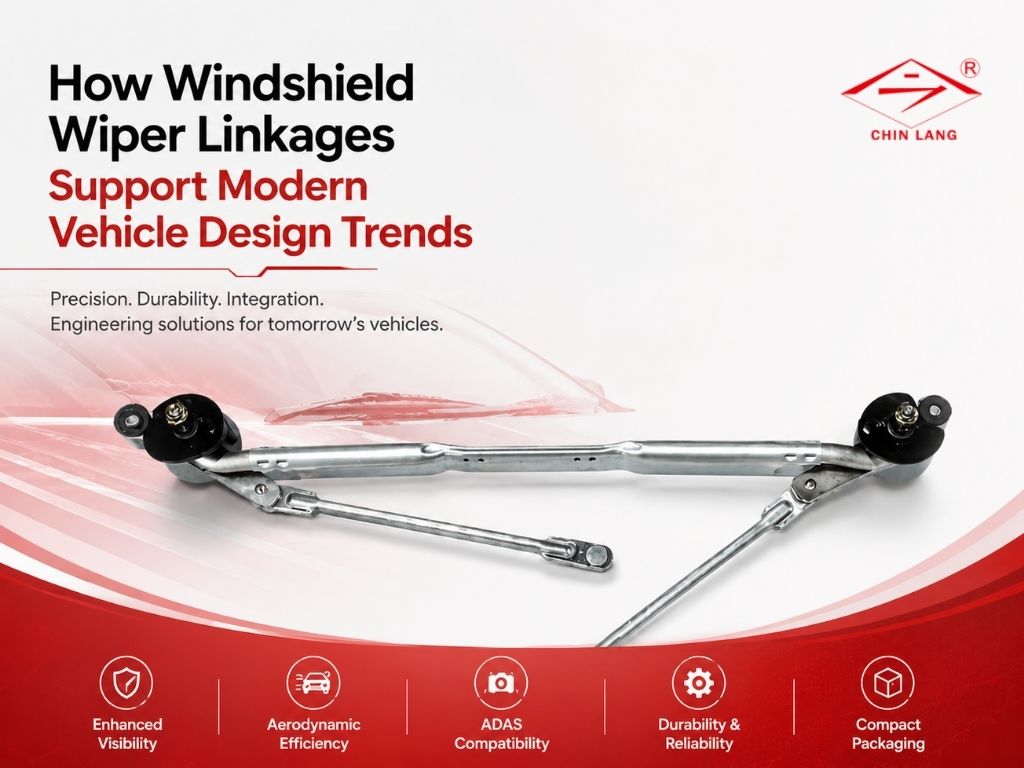
Vehicle design has changed dramatically over the past decade. Automakers are no longer focused solely on performance, styling, and manufacturing efficiency. Today’s vehicles must also meet increasingly demanding requirements related to aerodynamics, fuel economy, electric vehicle packaging, driver assistance technologies, safety regulations, and long-term reliability. As a result, even components that receive little attention from end users must evolve alongside modern vehicle platforms.
One such component is the windshield wiper linkage. Although hidden beneath the cowl panel, the windshield wiper linkage plays a critical role in converting motor movement into synchronized wiper arm motion. Its design directly affects wiping performance, visibility, system durability, and packaging efficiency. As vehicle architecture continues to evolve, windshield wiper linkages must be engineered to support new design priorities without compromising reliability.
Drawing from practical manufacturing and application experience in automotive wiper systems, including long-term development activities at Chin Lang Autoparts, engineers continue to see how vehicle design trends influence windshield wiper linkage requirements. From larger windshields and electric vehicle platforms to ADAS integration and modular vehicle architectures, modern automotive development is creating new challenges and opportunities for wiper linkage engineering.
The Windshield Wiper Linkage Has Become More Than a Motion Transfer Mechanism
Traditionally, a windshield wiper linkage was viewed as a straightforward mechanical component whose primary responsibility was to transfer motion from the wiper motor to the wiper arms. While this function remains essential, modern vehicle development has significantly expanded the performance expectations placed on the linkage system.
Today, windshield wiper linkages must support multiple engineering objectives simultaneously. They must provide precise synchronization, fit within increasingly compact packaging spaces, withstand long-term vibration and environmental exposure, and maintain stable wiping performance across a wide range of operating conditions.
Automakers also expect components to contribute to broader vehicle goals such as weight reduction, manufacturing efficiency, and platform standardization. As a result, windshield wiper linkage development has become an important part of overall vehicle engineering rather than a simple mechanical design task.
This shift has increased the importance of linkage geometry optimization, material selection, durability testing, and manufacturing precision during product development.
Larger Windshields Create New Wiping Challenges
One of the most noticeable trends in modern vehicle design is the growing size of windshields. SUVs, crossover vehicles, pickup trucks, and electric vehicles frequently incorporate larger glass surfaces to improve visibility and create a more spacious cabin environment.
While larger windshields offer significant benefits for drivers, they also increase the demands placed on the windshield wiper system. A larger wipe area requires longer arm travel, broader sweep patterns, and greater motion control accuracy. The linkage assembly must coordinate these movements while maintaining smooth operation and consistent blade contact across the glass surface.
As windshield dimensions increase, even small synchronization errors become more noticeable. Incomplete wipe coverage, uneven blade movement, and vibration can reduce visibility and negatively affect the driving experience.
To address these challenges, engineers often redesign linkage geometry to optimize leverage ratios and motion paths. Structural rigidity becomes increasingly important as larger wipe patterns generate greater loads during operation, particularly under heavy rain, snow, or high-speed driving conditions.
The result is a growing demand for windshield wiper linkages that can support larger wiping areas while maintaining precise and reliable performance.
Aerodynamic Vehicle Design Requires Smarter Packaging
Aerodynamics has become a major focus across the automotive industry. Reducing drag improves fuel efficiency, lowers emissions, decreases wind noise, and helps extend the driving range of electric vehicles.
To improve aerodynamic performance, vehicle designers frequently lower hood profiles, reduce exterior protrusions, and create smoother transitions between body panels and glass surfaces. These changes often reduce the available space for windshield wiper components beneath the cowl area.
For windshield wiper linkage engineers, this creates a significant packaging challenge. The linkage must continue to deliver the required wiping pattern while fitting into increasingly confined installation spaces.
Modern linkage systems often require more compact configurations and carefully engineered motion paths to maximize available space. Engineers must consider not only the linkage itself but also surrounding components such as HVAC systems, structural reinforcements, wiring harnesses, and electronic modules.
Effective packaging design ensures that the windshield wiper linkage can operate without interference while supporting the aerodynamic objectives of the overall vehicle platform.
Electric Vehicles Are Changing Design Priorities
Electric vehicle development introduces a different set of engineering considerations compared to traditional internal combustion engine platforms. While EVs eliminate some conventional engine components, they also introduce new packaging requirements and place greater emphasis on efficiency and weight reduction.
One notable difference is vehicle refinement. Because electric powertrains generate significantly less noise than combustion engines, drivers become more sensitive to sounds produced by auxiliary systems. Mechanical noise that may have gone unnoticed in traditional vehicles can become more apparent in electric vehicles.
As a result, windshield wiper linkage systems must operate smoothly and quietly. Engineers often place greater emphasis on reducing vibration, minimizing friction, and improving motion consistency.
Weight reduction is another important objective. Although the windshield wiper linkage represents only a small portion of total vehicle weight, every component contributes to overall efficiency goals. Manufacturers increasingly seek designs that provide sufficient strength while minimizing unnecessary mass.
These evolving priorities are encouraging continuous innovation in windshield wiper linkage engineering for EV applications.
ADAS Integration Makes Wiping Performance More Critical Than Ever
Advanced Driver Assistance Systems (ADAS) have transformed modern vehicle design. Cameras, sensors, radar systems, and other electronic technologies now play an important role in supporting driver safety and vehicle automation.
Many of these systems are positioned near the windshield and rely on a clear field of view to function correctly. If visibility is compromised by rain, snow, dirt, or incomplete wipe coverage, sensor performance may be affected.
This creates a direct connection between windshield wiper linkage performance and ADAS effectiveness.
A properly designed windshield wiper linkage helps ensure that critical camera and sensor zones remain clear during adverse weather conditions. Engineers must carefully evaluate wipe patterns to eliminate blind spots and maintain visibility where sensors are located.
As ADAS technology continues to advance, the importance of precise linkage geometry and synchronization will likely increase. Windshield wiper systems are no longer serving only the driver—they are also helping support the performance of vehicle safety technologies.
Durability Expectations Continue to Increase
Consumers and fleet operators expect vehicles to remain reliable for longer periods than ever before. Consequently, automakers place greater emphasis on component durability and lifecycle performance.
Windshield wiper linkages experience continuous mechanical cycling throughout their service life. They must withstand:
-
Repeated motion cycles
-
Road vibration
-
Moisture exposure
-
Temperature fluctuations
-
Corrosive environments
-
Heavy weather conditions
Over time, wear within pivots, joints, and linkage connections can affect synchronization and overall system performance.
To meet modern durability requirements, manufacturers increasingly focus on corrosion-resistant materials, wear-resistant interfaces, reinforced structural designs, and robust testing procedures. The goal is to ensure stable operation throughout years of vehicle use.
For commercial vehicles and fleet applications, where operating hours and environmental exposure are often more severe, durability becomes an even more critical consideration.
Modular Vehicle Platforms Require Greater Engineering Flexibility
Another major automotive trend is the use of modular vehicle architectures. Rather than developing entirely separate platforms for every vehicle model, manufacturers increasingly rely on shared platforms that support multiple vehicle variants.
While this approach improves manufacturing efficiency and reduces development costs, it creates additional challenges for component suppliers.
A windshield wiper linkage may need to support:
-
Different body styles
-
Multiple windshield dimensions
-
Various motor configurations
-
Regional design requirements
-
Different trim levels
As a result, suppliers must develop linkage solutions that offer both flexibility and consistency. Engineering teams often seek opportunities to standardize certain design elements while maintaining the ability to adapt linkage geometry for specific applications.
This balance between customization and scalability has become an important consideration in modern windshield wiper linkage development.
Windshield Wiper Linkage Engineering at Chin Lang Autoparts
Chin Lang Autoparts manufactures windshield wiper linkages for a wide range of passenger vehicle and commercial vehicle applications. The company's product portfolio supports OEM and aftermarket programs requiring dependable wiping performance, durable construction, and application-specific configurations.
Development efforts focus on achieving precise motion control, stable synchronization, structural durability, and long-term reliability under real-world operating conditions. By combining practical manufacturing experience with application-focused engineering, Chin Lang Autoparts helps customers address the evolving requirements of modern vehicle platforms.
As automotive technologies continue to advance, the company remains committed to supporting customers with windshield wiper linkage solutions designed to meet current and future vehicle design challenges.
FAQ — Windshield Wiper Linkages and Modern Vehicle Design
1. Why are windshield wiper linkages important in modern vehicles?
They convert motor rotation into synchronized wiper arm movement while supporting visibility, durability, packaging efficiency, and overall system performance.
2. How do larger windshields affect linkage design?
Larger windshields require wider wipe coverage, increased structural strength, and more precise synchronization to maintain consistent visibility.
3. Why are windshield wiper linkages important for ADAS-equipped vehicles?
Proper wipe coverage helps keep cameras and sensors clear, supporting the effectiveness of advanced driver assistance systems.
4. Do electric vehicles require different windshield wiper linkage designs?
Many EV platforms require more compact, lightweight, and quieter linkage systems to support packaging and refinement goals.
5. What factors influence windshield wiper linkage durability?
Material quality, corrosion resistance, structural design, manufacturing precision, and operating conditions all affect long-term durability.
Partner with a Trusted Windshield Wiper Linkage Manufacturer
Modern vehicle development continues to push the boundaries of design, efficiency, safety, and technology integration. As these trends evolve, windshield wiper linkages must adapt to meet increasingly complex performance requirements.
With extensive automotive component manufacturing experience, Chin Lang Autoparts provides windshield wiper linkage solutions designed to support modern vehicle platforms, OEM development programs, and aftermarket applications. Through a commitment to engineering quality, manufacturing consistency, and long-term reliability, the company helps customers achieve dependable wiping performance across diverse vehicle applications.
Contact Chin Lang Autoparts to learn more about windshield wiper linkage products, custom development opportunities, and OEM cooperation programs.