
SEARCH PRODUCTS
Key Design Factors Behind a Durable Fuel Gauge Sensor for Automotive Applications
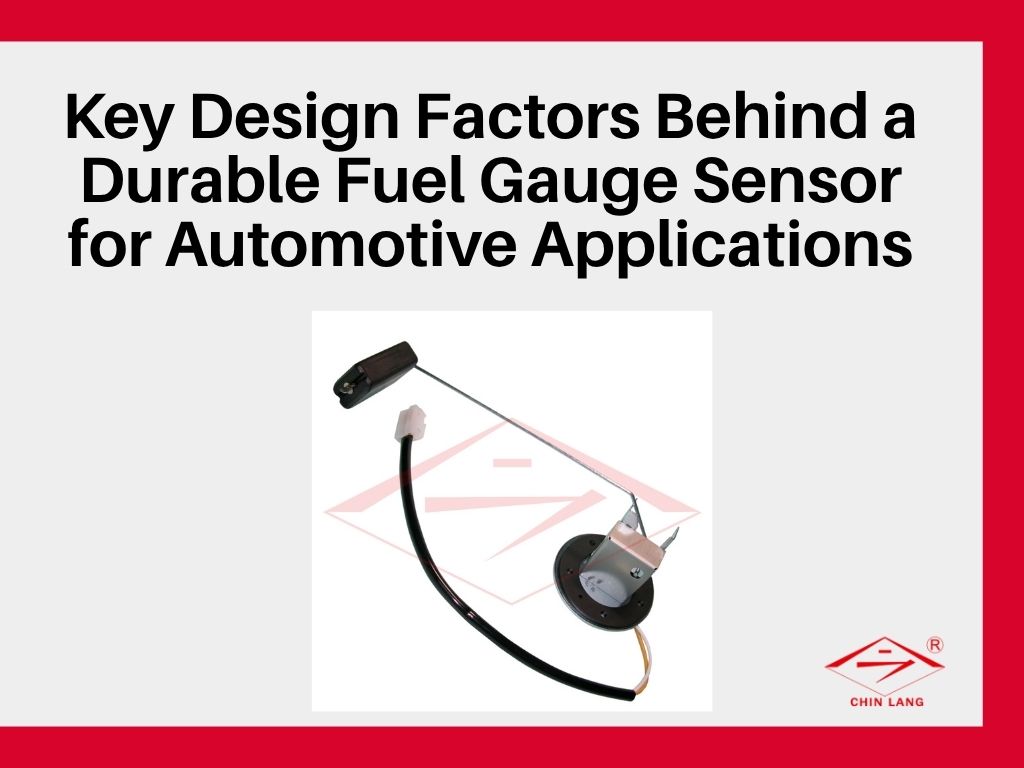
A fuel gauge sensor may appear to be a simple component, but its performance directly affects fuel level accuracy, driver confidence, and vehicle usability. Whether in passenger cars, commercial vehicles, or specialty applications, the reliability of a fuel gauge sensor depends heavily on how it is engineered.
Because fuel gauge sensors operate continuously inside the fuel tank, they must withstand constant fuel exposure, vibration, temperature variation, and repeated movement over the vehicle’s lifespan. Poorly designed sensors may suffer from inaccurate readings, premature wear, or complete signal failure, leading to maintenance issues and customer dissatisfaction.
Drawing from long-term manufacturing and application experience in automotive fluid and sensing components, including ongoing development work at Chin Lang Autoparts, engineers recognize that durability in fuel gauge sensors is determined by far more than basic functionality. Structural design, material selection, calibration precision, and manufacturing consistency all play critical roles in long-term performance.
Why Fuel Gauge Sensor Durability Matters
A fuel gauge sensor continuously monitors fuel level inside the fuel tank and transmits this information to the dashboard gauge or electronic display.
When durability is insufficient, common issues include:
- Inaccurate fuel level readings
- Delayed gauge response
- Intermittent signal fluctuation
- Complete gauge failure
- Increased warranty and service costs
Because the fuel gauge sensor is often integrated within the fuel tank module, replacement can require significant labor. For this reason, long service life is a critical requirement.
Float Mechanism Design and Stability
The float mechanism is the primary moving component within most fuel gauge sensor assemblies.
Key design considerations include:
- Smooth vertical travel across the full fuel range
- Stable buoyancy in different fuel types
- Resistance to sticking or drag
- Secure arm geometry to maintain calibration
Poor float design may result in:
- Erratic level readings
- Sensor dead zones
- Calibration drift over time
A well-balanced float mechanism ensures consistent fuel level tracking throughout repeated fill and drain cycles.
Contact and Resistance Track Durability
Many fuel gauge sensors use a resistive contact system to convert float position into an electrical signal.
Durability depends on:
- Wear-resistant contact materials
- Stable contact pressure
- Corrosion-resistant conductive surfaces
- Consistent resistance path geometry
Because this contact system may cycle thousands of times over vehicle life, wear resistance is essential for long-term accuracy.
Fuel Compatibility and Chemical Resistance
Modern fuels contain additives, ethanol blends, and chemical stabilizers that can degrade unsuitable materials.
Fuel gauge sensors must be designed using materials that resist:
- Fuel swelling
- Chemical corrosion
- Seal degradation
- Float material absorption
Improper material selection may shorten service life dramatically.
Vibration and Mechanical Shock Resistance
Fuel tanks experience constant vibration from:
- Engine operation
- Road conditions
- Off-road use
- Heavy vehicle movement
Fuel gauge sensors must maintain stable operation despite:
- Repeated vibration loading
- Sudden impact forces
- Continuous float movement from fuel slosh
Structural rigidity and secure mounting are critical for maintaining calibration.
Calibration and Signal Accuracy
Even a durable mechanical design is ineffective if the sensor cannot provide accurate output.
Important calibration factors include:
- Resistance range consistency
- Float-to-signal linearity
- Tolerance control during assembly
- Compatibility with vehicle gauge systems
Poor calibration can cause:
- Gauge inaccuracies at full or empty levels
- Non-linear readings
- Customer complaints despite mechanically functional sensors
Passenger Car vs Commercial Vehicle Requirements
| Vehicle Type | Key Durability Requirement |
|---|---|
| Passenger Cars | Smooth operation and compact design |
| Pickup Trucks | Higher vibration resistance |
| Commercial Vehicles | Extended cycle life and robust structure |
| Off-Road Vehicles | Enhanced shock resistance |
Fuel Gauge Sensor Manufacturing at Chin Lang Autoparts
Chin Lang Autoparts manufactures fuel gauge sensors engineered to meet OE-standard compatibility and dependable fuel level sensing performance across a wide range of vehicle applications. Its fuel gauge sender product line supports both OEM and aftermarket programs with model-specific designs developed for fitment accuracy and stable signal output.
Each fuel gauge sensor is built with attention to float mechanism balance, signal consistency, and long-term durability under real fuel tank operating conditions. Product development emphasizes reliable fuel compatibility, wear-resistant contact performance, and repeatable calibration to maintain accurate fuel level readings throughout the service life of the vehicle.
Backed by extensive automotive component manufacturing experience, Chin Lang Autoparts provides fuel gauge sensor solutions that help automakers and distributors achieve stable gauge performance, reduced warranty concerns, and dependable long-term reliability.
FAQ — Fuel Gauge Sensor Design and Durability
1. What causes a fuel gauge sensor to fail early?
Common causes include contact wear, poor material selection, corrosion, and vibration damage.
2. Does fuel type affect fuel gauge sensor lifespan?
Yes. Ethanol blends and additives can accelerate degradation if materials are not compatible.
3. Why do fuel gauges sometimes fluctuate while driving?
Fuel slosh, weak float stability, or poor sensor damping can cause unstable readings.
4. Are all fuel gauge sensors resistive type?
No. Some modern systems use capacitive or electronic sensing designs, but resistive sensors remain common.
5. Can calibration affect durability?
Indirectly yes. Poor calibration may increase mechanical stress if float travel or contact pressure is improperly set.
Partner with a Trusted Fuel Gauge Sensor Manufacturer
Fuel level accuracy depends on more than simple sensing. It requires durable engineering, stable calibration, and reliable manufacturing. A well-designed fuel gauge sensor helps automakers and aftermarket suppliers deliver better vehicle usability and long-term reliability.
With extensive automotive component manufacturing experience, Chin Lang Autoparts provides fuel gauge sensor solutions engineered for durability, compatibility, and consistent real-world performance.
Contact Chin Lang Autoparts to discuss fuel gauge sensor specifications, OEM development opportunities, and supply cooperation.