
SEARCH PRODUCTS
Why OEM-Quality Reservoir Tanks Improve Cooling System Reliability
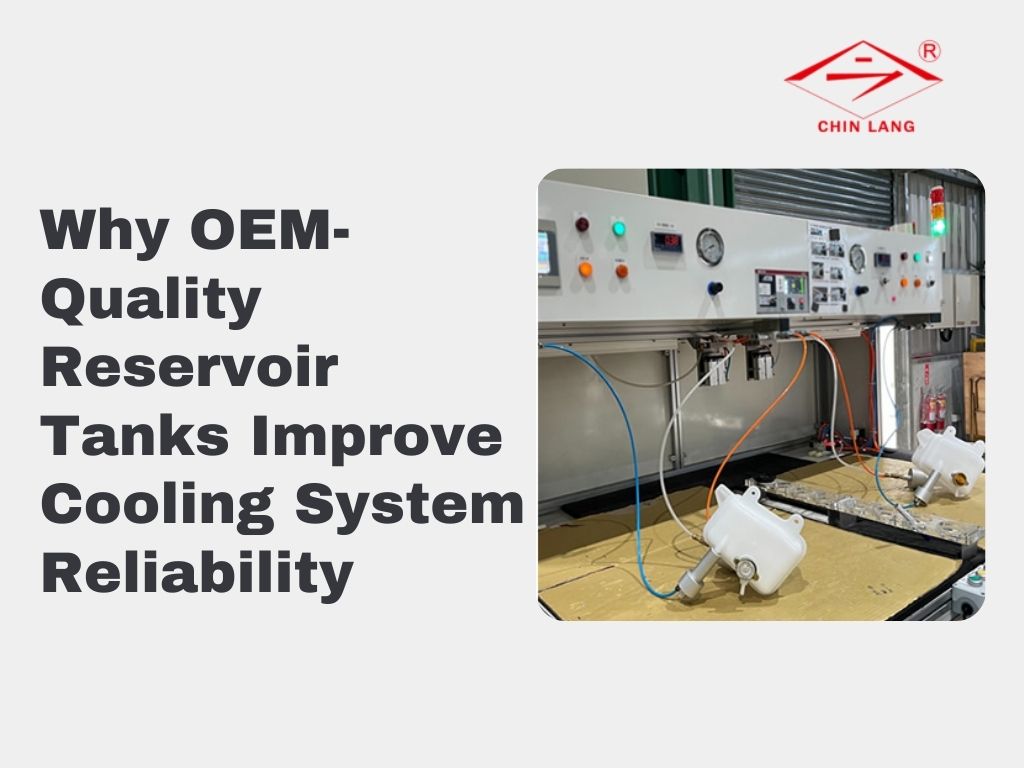
In modern vehicles, maintaining a stable engine temperature is essential for performance, fuel efficiency, and long-term durability. One often overlooked but critical component in this process is the reservoir tank, also commonly referred to as a coolant reservoir tank or coolant overflow tank. While small in size compared to radiators or fans, the reservoir tank plays a key role in regulating coolant volume and pressure within the engine cooling system.
With decades of hands-on experience supplying automotive cooling and fluid management components to global OEM and aftermarket customers, Chin Lang Autoparts has seen firsthand how reservoir tank quality directly affects cooling system reliability. Differences in material selection, structural design, and manufacturing precision often determine whether a cooling system operates consistently over time or develops leaks, deformation, and overheating issues. This article explains why choosing an OEM-quality reservoir tank is critical for long-term vehicle performance and durability.
What Does a Reservoir Tank Do in a Cooling System?
A reservoir tank serves as a buffer within the engine cooling system. Its main functions include:
- Collecting excess coolant as it expands due to heat
- Supplying coolant back to the radiator as the engine cools
- Maintaining stable coolant levels under varying operating conditions
- Preventing air from entering the cooling circuit
Because the reservoir tank experiences constant temperature changes, internal pressure, and exposure to coolant chemicals, its material quality and design integrity are critical.
Common Problems Caused by Low-Quality Reservoir Tanks
Low-grade or poorly designed reservoir tanks can lead to several system-level issues, including:
Coolant Leakage
Inferior plastics may crack over time due to heat cycling, leading to slow leaks that reduce coolant volume and compromise cooling efficiency.
Deformation Under Heat
Reservoir tanks that lack proper heat resistance may deform, causing improper sealing at hose connections or cap interfaces.
Inaccurate Coolant Level Readings
Poor molding accuracy can distort level markings, making routine inspection unreliable and increasing the risk of overheating.
Premature Cooling System Failure
When coolant levels drop unnoticed, the radiator, water pump, and engine components are exposed to higher thermal stress.
These issues often appear gradually, making them difficult to detect until damage has already occurred.
Why OEM-Quality Reservoir Tanks Make a Difference
OEM-quality reservoir tanks are engineered to meet strict performance and durability standards. Key advantages include:
Consistent Material Performance
High-grade plastics are selected for:
- Heat resistance
- Chemical stability against coolant additives
- Long-term structural integrity
Precision Manufacturing
OEM reservoir tanks are produced with tight dimensional tolerances, ensuring:
- Secure hose connections
- Proper cap sealing
- Accurate coolant level indication
System Compatibility
OEM-quality tanks are designed to integrate seamlessly with:
- Radiators
- Cooling fans
- Hoses and caps
- Engine bay layout
This compatibility reduces installation errors and ensures stable cooling performance.
Reservoir Tank Requirements for Trucks and Commercial Vehicles
Compared to passenger cars, trucks and commercial vehicles operate under more demanding conditions, such as:
- Higher engine output and heat generation
- Longer operating hours
- Increased vibration
- Exposure to dust and harsh environments
For these applications, reservoir tanks must offer:
- Reinforced wall thickness
- Enhanced resistance to deformation
- Secure mounting design
- Reliable sealing under continuous pressure cycles
Using non-OEM or low-grade reservoir tanks in commercial vehicles significantly increases the risk of downtime and costly repairs.
OEM vs Aftermarket Reservoir Tanks: A Practical Comparison
| Aspect | OEM-Quality Reservoir Tank | Low-Grade Aftermarket Tank |
|---|---|---|
| Material Quality | High heat and chemical resistance | Inconsistent plastic performance |
| Dimensional Accuracy | Precise fitment | Risk of misalignment |
| Durability | Long service life | Higher crack and leak risk |
| System Reliability | Stable coolant control | Increased overheating risk |
| Maintenance Cost | Lower long-term cost | Higher replacement frequency |
Reservoir Tank Manufacturing at Chin Lang Autoparts
Chin Lang Autoparts manufactures a full range of automotive reservoir tanks as part of a comprehensive cooling and fluid system product portfolio. These solutions support passenger cars, trucks, and commercial vehicles across both OEM and aftermarket applications.
Key features of the reservoir tank lineup include:
- Carefully selected engineering plastics for heat and chemical resistance
- Precision molding processes to ensure consistent wall thickness and structural strength
- Secure hose and cap interface design to prevent leakage under pressure
- Model-specific development aligned with OEM specifications
- Stable quality control systems to support long-term supply programs
By integrating reservoir tanks with other cooling system components, Chin Lang Autoparts helps customers improve overall system reliability while reducing warranty and maintenance risks.
When Should a Reservoir Tank Be Replaced?
Replacement should be considered if:
- Visible cracks or discoloration appear
- Coolant level drops without external leaks elsewhere
- The tank shows signs of deformation
- Hose connections no longer seal properly
- The vehicle has experienced repeated overheating
Routine inspection during scheduled maintenance helps identify early signs of failure before system damage occurs.
FAQ: Reservoir Tank Selection and Reliability
1. Is a reservoir tank the same as a radiator?
No. The reservoir tank manages coolant expansion and recovery, while the radiator dissipates heat.
2. Can a damaged reservoir tank cause engine overheating?
Yes. Coolant loss or air entry can reduce cooling efficiency and lead to overheating.
3. Are plastic reservoir tanks durable enough?
Yes, when manufactured with OEM-grade materials and proper design.
4. Do trucks need special reservoir tanks?
Yes. Commercial vehicles require higher durability and structural reinforcement.
5. How do I choose the right reservoir tank?
Ensure correct vehicle application, material quality, and OEM-level compatibility.
Final Thoughts
A reservoir tank may appear to be a simple component, but its role in maintaining cooling system stability is essential. Choosing an OEM-quality reservoir tank helps prevent leaks, overheating, and premature engine wear, protecting both vehicle performance and long-term reliability.
As an experienced automotive component manufacturer, Chin Lang Autoparts remains committed to delivering reservoir tank solutions that meet demanding OEM standards and real-world operating conditions. For customers seeking stable quality, consistent supply, and proven engineering expertise, reservoir tank selection should never be an afterthought.